
Both Houses of Parliament were adjourned sine die, concluding a Budget session marked by the passage of key legislations and the defeat of a Constitution amendment bill on women's reservation. The session saw frequent opposition protests and discussions on various issues, including the West Asia conflict.

The first leg of the Budget session concluded with debates over the India-US trade deal and a former army chief's memoir, and will reassemble on March 9.
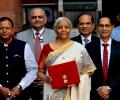
The Budget session of Parliament will be held from January 28 to April 2, featuring the President's address, the Economic Survey, and the presentation of the general Budget.
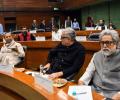
India's Parliament is set to begin its Budget session on Friday, with opposition parties poised to demand a discussion on the alleged mismanagement of the Maha Kumbh festival in Prayagraj, where 30 pilgrims died in a stampede. The opposition also accused the government of politicising parliamentary committees and pushing its agenda through its majority. The session will start with President Droupadi Murmu addressing both houses of Parliament. Finance Minister Nirmala Sitharaman will present the Union Budget on Saturday for the eighth consecutive time.
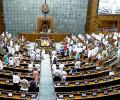
India's Monsoon session of Parliament remains formally unprorogued 40 days after adjournment, setting a new record. This unusual delay fuels speculation that the government intends to introduce a key legislation, possibly an amendment to the women's reservation law, without convening a new session. The proposed amendment aims for a 50 per cent seat expansion to address concerns over delimitation.

The Indian Parliament is expected to extend its budget session to introduce a bill increasing Lok Sabha seats to 816, reserving 273 for women, and amending the women's reservation law.

A brief Budget session of Parliament, the last of the 17th Lok Sabha, will be held between January 31 and February 9, Parliamentary Affairs Minister Pralhad Joshi said on Friday.

The absence of NCP-SP leaders from a key Maha Vikas Aghadi meeting in Maharashtra has ignited concerns about opposition unity ahead of the crucial budget session and upcoming Rajya Sabha elections.

Ten days after both Houses of Parliament were adjourned sine die, the Monsoon session is yet to end formally, giving rise to speculation that the government wants to pass a key legislation without convening a new session.

More than half of the bills introduced in the 18th Lok Sabha have been passed by both Houses in the same session, a significant acceleration compared to previous terms, raising concerns about the time available for legislative scrutiny and stakeholder consultations.

Lok Sabha takes up FCRA Amendment Bill amid opposition protests.
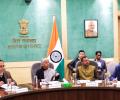
Parliament's Budget Session will be held from January 31 to April 4, with Finance Minister Nirmala Sitharaman set to table her eighth straight budget on February 1. The session will begin with President Droupadi Murmu's address to a joint sitting of the Lok Sabha and Rajya Sabha on January 31, followed by the tabling of the economic survey. The first part of the Budget Session will have nine sittings from January 31 to February 13, after which Parliament will break for recess to examine the budget proposals. The session will reconvene on March 10 to discuss the demands for grants of various ministries and complete the budgetary process, concluding on April 4.
The government has also listed three new bills for the session -- 'The Protection of Interests in Aircraft Objects Bill, 'Tribhuvan Sahkari University Bill', and the 'Immigration and Foreigners Bill'.

The President will address both the Houses of Parliament assembled together in the Lok Sabha chamber on Friday and Finance Minister Nirmala Sitharaman will present the General Budget on Saturday.
Parliament will reconvene on March 12 for the second part of the Budget Session.

The Lok Sabha's monsoon session concluded on Thursday, marked by relentless opposition protests over critical issues like the NEET paper leak and police action on students, yet saw the passage of several key bills without extensive debate. Home Minister Amit Shah expressed readiness to debate the student protest issue, urging the speaker to allocate time.

The Parliament resumes on Monday after a break. WATCH THE LIVE DEBATES HERE.

Like the winter session of the Parliament, the budget session has also begun on a stormy note.

Battle lines have already been drawn and the opposition has insisted on a debate on demonetisation.

A communication from the Lok Sabha Secretariat said on Thursday that the session would conclude on April 8.
The session started on January 29 and was originally slated to end on April 8 but several members had urged Speaker Om Birla to end the session earlier as they focus on electioneering for the five assemblies.
Budget session will begin on February 23 and conclude on May 8
The session will begin with the address of the President to the joint sitting of the two Houses on Friday morning followed by the presentation of the Union Budget on February 1.

In the Rajya Sabha, Chairman M Venkaiah Naidu could not read out his customary closing remarks that sum up the business conducted in the House during the session, as Shiv Sena and other opposition MPs created a ruckus.

The Budget Session of Parliament will commence on Monday and is scheduled to conclude on April 8 wherein the first part of the session will extend up to February 11, said the Lok Sabha Secretariat on Sunday.
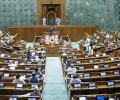
The deportation of Indians from the United States, deaths in the Maha Kumbh stampede and the joint Parliamentary committee report on the Waqf bill were among the issues that led to heated exchanges and some disruptions in an otherwise smooth first part of the Budget session that ended on Thursday.
Pakistan has increased its defence budget by 17.6 per cent to PKRs 3,000 billion for the upcoming fiscal year, as announced by Finance Minister Muhammad Aurangzeb. The federal budget, estimated at PKRs 18,771 billion, targets 4 per cent GDP growth, with significant allocations for debt service and pensions. Prime Minister Shehbaz Sharif highlighted economic stability and ongoing discussions with the IMF, while the opposition protested Imran Khan's incarceration during the budget session.
The winter session of Parliament usually starts from the last week of November or the first week of December, while the budget session starts from the last week of January and the Union Budget is tabled on February 1.
Battle lines have already been drawn and the opposition has insisted on a debate on demonetisation.
The Railway Budget will be presented on February 25 while the Union Budget will be presented on February 29.
The BJP has issued a three-line whip to its MPs, requiring their presence during the extended Budget session of Parliament, where amendments to the Women's Reservation Act are expected to be considered.
The first part of the session will conclude on February 11. After a month-long recess, the part two of the session would begin from March 14 and conclude on April 8.

The controversial VVIP chopper scam is set to turn the three-month-long Budget session of Parliament beginning Thursday into a troubled affair for the government with the Opposition raring for an attack eyeing the Lok Sabha polls which are not far away.

Watch all the the debates and proceedings.
According to the Committee's recommendation, while Part 1 of the Budget session would be held from January 29 to February 15, Part 2 would be from March 8 to April 8.

The Budget Session of Parliament will commence on February 22 and the General Budget for 2010-11 will be presented on February 26.

"The ray of hope being seen by the world will glow brighter -- for this, I firmly believe the finance minister will make all efforts to meet these aspirations," Modi said.

Top on the government's agenda would be getting Parliament's approval to the budgetary proposals and presentation of the budget for the Union Territory of Jammu and Kashmir.

Both Lok Sabha and Rajya Sabha committees had recommended that their suspension be withdrawn after they expressed regret for their conduct during the Winter session when their relentless protests prompted the Chairs to take action.

Finance Minister Nirmala Sitharaman will present the general budget in Parliament on February 1. The Budget session of Parliament begins on January 28 with President Droupadi Murmu addressing both houses.
